
Demystifying Financial Reports: What Investors Need to Know
Understanding Financial Reports
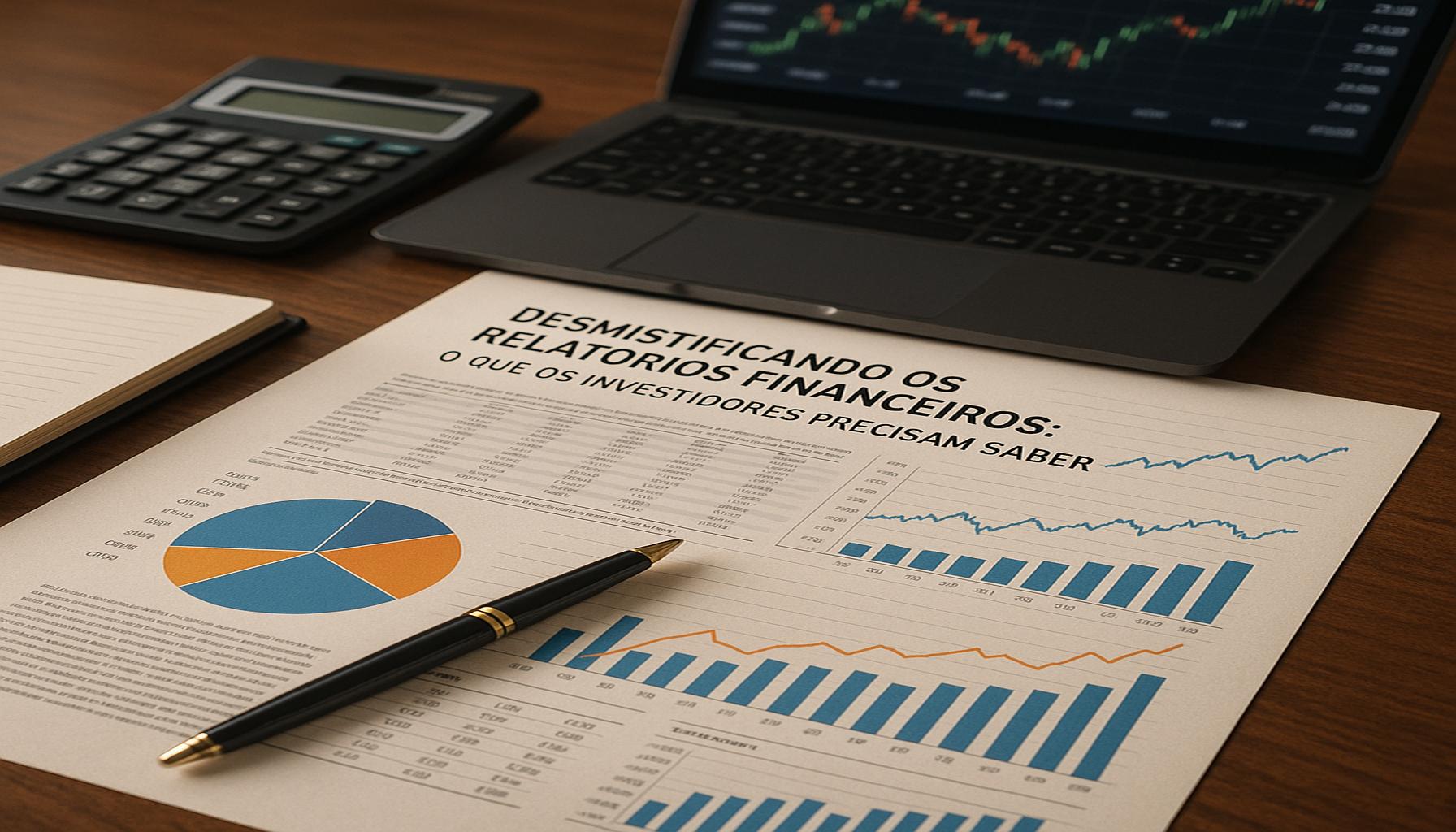
For investors, financial reports serve as the foundational documents that provide a comprehensive overview of a company’s financial health. These reports are instrumental in allowing stakeholders to analyze performance trends, gauge operational efficiency, and predict future profitability. By scrutinizing these essential documents, investors can make decisions that are data-driven rather than based on speculation or incomplete information.
Among the key components of financial reports, the Income Statement is particularly vital as it outlines a company’s revenues, expenses, and profits over a designated period, usually quarterly or annually. For example, if a technology company reports an increase in sales from $1 million to $1.2 million over a year, this highlights its ability to grow revenues, which is a positive signal to investors.
Another crucial document is the Balance Sheet, which presents a detailed snapshot of a company’s financial position at a specific point in time. It lists assets, liabilities, and shareholder equity, offering essential insights into what the company owns versus what it owes. An investor can analyze whether a company is over-leveraged by examining its debt-to-equity ratio. For example, a company with Total Assets of $1.5 billion and Total Liabilities of $1 billion has a healthy equity buffer, indicating financial stability.
The Cash Flow Statement further complements the financial analysis by illustrating the cash inflows and outflows, thereby revealing how well a company can manage its cash position. For instance, a company generating consistent positive cash flow demonstrates its ability to sustain operations, invest in growth opportunities, and return capital to shareholders through dividends or stock buybacks.
When analyzing these financial documents, investors should hone in on specific metrics to evaluate a company’s viability. Revenue Growth is a key indicator; an upward trajectory in sales often correlates with market demand and a competitive edge. Profit Margins illustrate how efficiently a company converts sales into profits. A technology firm that maintains a profit margin of 20% compared to an industry average of 15% signals better operational efficiency.
Moreover, the Return on Equity (ROE) is a crucial measurement for assessing a company’s profitability relative to shareholders’ equity, providing insights into how effectively management is utilizing shareholder funds to generate earnings. A higher ROE suggests more efficient management, potentially leading to greater investor confidence.
By demystifying financial reports, investors can significantly enhance their understanding of the market landscape. This heightened awareness not only fosters informed investment choices but also instills greater confidence in navigating the often volatile and complex financial environments typical of today’s markets.
DISCOVER MORE: Click here for further insights
Key Components of Financial Reports
Understanding the primary components of financial reports is crucial for investors seeking to assess a company’s viability and long-term potential. Each component provides unique insights and, together, they form a comprehensive picture of a company’s financial performance and position.
Income Statement: The Earnings Overview
The Income Statement not only details a company’s revenues and expenses but also offers insights into its operational efficiency. Key terms to look for within the income statement include:
- Gross Profit: The revenue left after deducting the cost of goods sold (COGS), which indicates how efficiently a company produces its goods.
- Operating Income: This figure results from subtracting operating expenses from gross profit, representing the earnings generated from core business operations.
- Net Income: The bottom line of the income statement, showcasing the total profit or loss after all expenses, taxes, and interest have been accounted for.
A company that consistently displays increases in gross and net income signals operational growth. For instance, if a healthcare provider records a net income increase from $200 million to $300 million in a fiscal year, it suggests operational success and efficiency that investors may want to note.
Balance Sheet: The Financial Snapshot
The Balance Sheet is another pivotal document that provides insight into a company’s financial standing at a specific point in time. Key elements of the balance sheet include:
- Total Assets: Resources owned by the company, encompassing cash, inventory, property, and equipment.
- Total Liabilities: Obligations the company owes to outside parties, including loans, accounts payable, and other debts.
- Shareholder Equity: A measure of the net worth of the company, calculated as Total Assets minus Total Liabilities. This figure represents the ownership stake that shareholders have in the company.
For investors analyzing a technology firm, for example, a balance sheet revealing total assets of $2 billion against total liabilities of $800 million indicates a favorable debt-to-equity ratio. This ratio can suggest that the company is less exposed to financial risk, making it an attractive candidate for investment.
Cash Flow Statement: The Liquidity Indicator
The final key component is the Cash Flow Statement, which is essential for understanding a company’s cash movements over a certain period. Investors should focus on three primary sections:
- Operating Activities: Cash generated from core business operations, including receipts from customers and payments to suppliers.
- Investing Activities: Cash utilized in capital expenditures for property, equipment, and asset purchases that fuel future growth.
- Financing Activities: Cash flows related to transactions with the company’s owners and creditors, such as issuing stock or paying dividends.
A company demonstrating positive cash flow from operating activities is typically a sign of strong business performance and financial health. For instance, if a consumer goods company shows an operational cash flow increase from $150 million to $250 million, this trend suggests robust market demand and effective financial management.
By carefully analyzing these components, investors can gain valuable insights into a company’s performance, thereby enabling informed investment decisions adjusted to the inherent risks and opportunities within the market. Understanding these metrics allows investors not only to assess current financial health but also to strategize for future growth trajectories.
DISCOVER MORE: Click here to learn about the relevance of life insurance in today’s market
Interpreting Financial Ratios: A Tool for Analysis
While the primary components of financial reports provide essential insights, investors can gain a deeper understanding of a company’s performance through the examination of financial ratios. These ratios serve as analytical tools that facilitate comparisons, identify trends, and evaluate a company’s financial health relative to its peers or industry benchmarks.
Profitability Ratios: Assessing Earnings Potential
Profitability Ratios are key indicators used to analyze a company’s ability to generate profit relative to sales, assets, and equity. Important ratios to consider include:
- Gross Margin: Calculated as Gross Profit divided by Total Revenue, this ratio indicates the percentage of revenue that exceeds the cost of goods sold. A higher gross margin suggests better efficiency in production.
- Operating Margin: This is obtained by dividing Operating Income by Total Revenue, reflecting how much profit a company makes from its operations before accounting for taxes and interest. This ratio can reveal operational efficiency.
- Net Profit Margin: This ratio is calculated as Net Income divided by Total Revenue, illustrating the overall profitability of the company. A rising net profit margin can indicate better cost controls and pricing power.
For example, a retail company boasting a net profit margin improvement from 5% to 8% over a fiscal year could imply effective cost management and enhanced sales strategies, making it potentially attractive to investors.
Liquidity Ratios: Understanding Short-Term Financial Stability
Liquidity Ratios measure a company’s ability to meet short-term obligations, which is particularly vital in assessing financial health. Key liquidity ratios include:
- Current Ratio: This ratio, calculated by dividing Current Assets by Current Liabilities, assesses a company’s ability to cover its short-term debts. A current ratio above 1 suggests sufficient asset coverage.
- Quick Ratio: Also known as the acid-test ratio, it refines the current ratio by excluding inventory from current assets. This provides a more stringent measure of liquidity, as it illustrates immediate solvency status.
An example of its significance can be seen in a manufacturing firm with a current ratio of 2.5, indicating that the company possesses $2.50 in current assets for every $1 in current liabilities. This situation suggests strong liquidity and minimal risk of financial distress.
Leverage Ratios: Evaluating Financial Risk
Leverage Ratios help investors understand the extent to which a company is using debt to finance its operations. Key ratios include:
- Debt-to-Equity Ratio: This ratio, which divides Total Liabilities by Shareholder Equity, illustrates the proportion of debt vs. equity financing. A lower ratio is often preferred, signaling less financial risk.
- Interest Coverage Ratio: Calculated by dividing Operating Income by Interest Expense, this ratio shows how easily a company can pay interest on outstanding debt. A higher interest coverage indicates better financial stability.
For instance, a real estate company with a debt-to-equity ratio of 0.4 may be viewed as conservatively financed, potentially appealing to risk-averse investors, whereas a ratio above 1 suggests a reliance on debt that could increase financial risk.
Using these financial ratios in conjunction with traditional financial reports equips investors with a nuanced perspective of a company’s operational viability, debt exposure, and potential for growth. By integrating ratio analysis into their investment strategy, investors can make informed decisions rooted in a thorough comprehension of a company’s financial dynamics and market positioning.
DIVE DEEPER: Click here
Conclusion: Navigating the Landscape of Financial Reports
In conclusion, understanding financial reports is fundamental for investors seeking to make informed decisions in the complex landscape of the market. By grasping the significance of core components such as the income statement, balance sheet, and cash flow statement, investors can uncover essential insights into a company’s operational performance and financial health. However, the journey does not end with these primary statements.
The examination of financial ratios offers a powerful toolkit that enhances an investor’s ability to assess profitability, liquidity, and leverage. Through the meticulous analysis of profitability ratios, investors can evaluate earnings potential and identify effective management strategies. Meanwhile, liquidity ratios shed light on short-term financial stability, allowing investors to gauge a company’s capacity to meet immediate obligations. Finally, leverage ratios provide critical insights into the financial risk associated with a company’s debt levels, enabling investors to make calculated decisions based on their risk tolerance.
As the financial landscape continues to evolve, keeping abreast of these tools and methodologies will empower investors to navigate through uncertainty with confidence. By integrating both traditional financial analysis and ratio evaluation into their investment strategies, investors can cultivate a comprehensive understanding of a company’s dynamics. Ultimately, this knowledge will foster prudent investment choices and contribute to achieving long-term financial success.

Maria Eduarda
Linda Carter is a writer and financial consultant specializing in economics, personal finance, and investment strategies. With years of experience helping individuals and businesses make complex financial decisions, Linda provides practical analyses and guidance on the Meaning of Dreaming platform. Her goal is to empower readers with the knowledge needed to achieve financial success.